
Connect PostgreSQL
Connect a PostgreSQL database to NQRust Analytics.
Connecting PostgreSQL to NQRust Analytics involves three stages: enter the connection settings, select the tables you want, and define how those tables relate to one another.
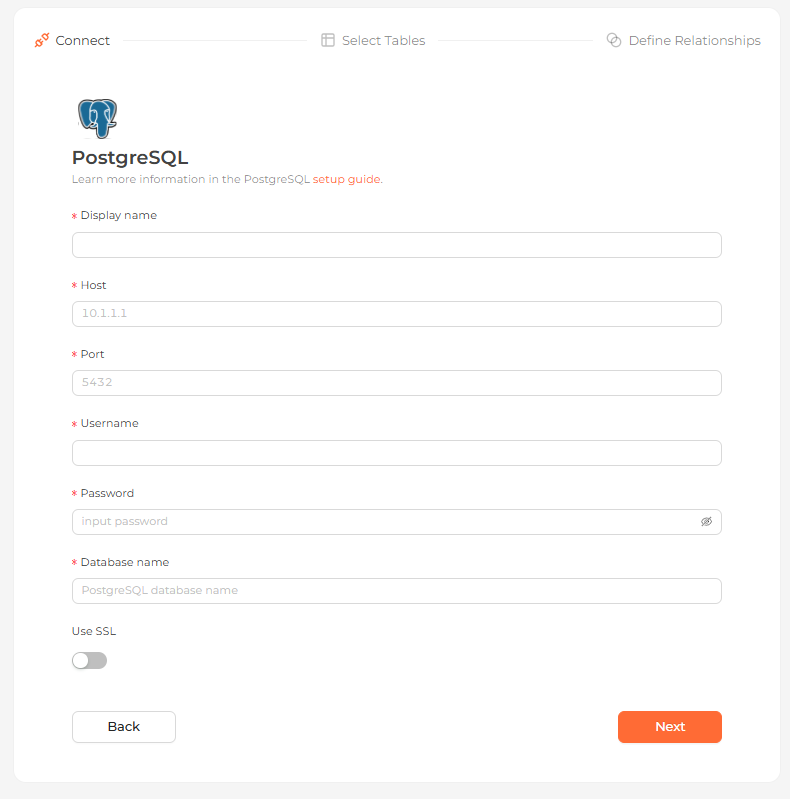 The PostgreSQL connection form in the Analytics UI
Required permissions
The PostgreSQL account you connect with needs at least these privileges:
SELECTon the tables and views you plan to queryCREATE TEMPORARY VIEWDROP VIEW
NQRust Analytics creates temporary views during query execution. These views use unique, system-generated names, so they will not conflict with or overwrite anything already present in your database.
Connection settings
| Field | Description |
|---|---|
| Display name | (required) The name this database shows up as in the Analytics UI. |
| Host | (required) The PostgreSQL server's IP address or hostname, e.g. 10.1.1.1. |
| Port | (required) The port the server listens on, e.g. 5432. |
| Username | (required) The database account used to authenticate. |
| Password | (required) That account's password. |
| Database name | (required) The specific database to connect to. |
| Use SSL | (optional) Toggle SSL on for the connection. Off by default. |
Running PostgreSQL locally on macOS or Windows? Use host.docker.internal as
the host so the container can reach your machine.
Steps
Enter connection details
Complete the fields above and click Next. NQRust Analytics validates the connection.
Select tables
Choose which tables to import. Each table you select becomes a data model.
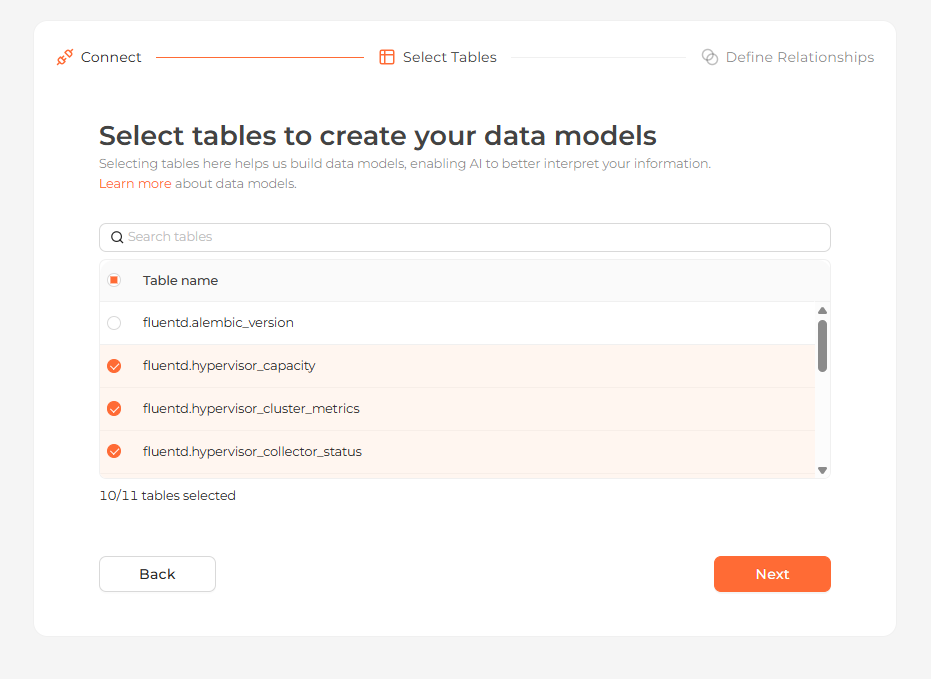 Selecting the tables to import as data models
Define relationships
Connect your tables by setting a From column, a To column, and a relationship type. NQRust Analytics suggests relationships from existing primary and foreign keys. You can add your own or skip this step for now.
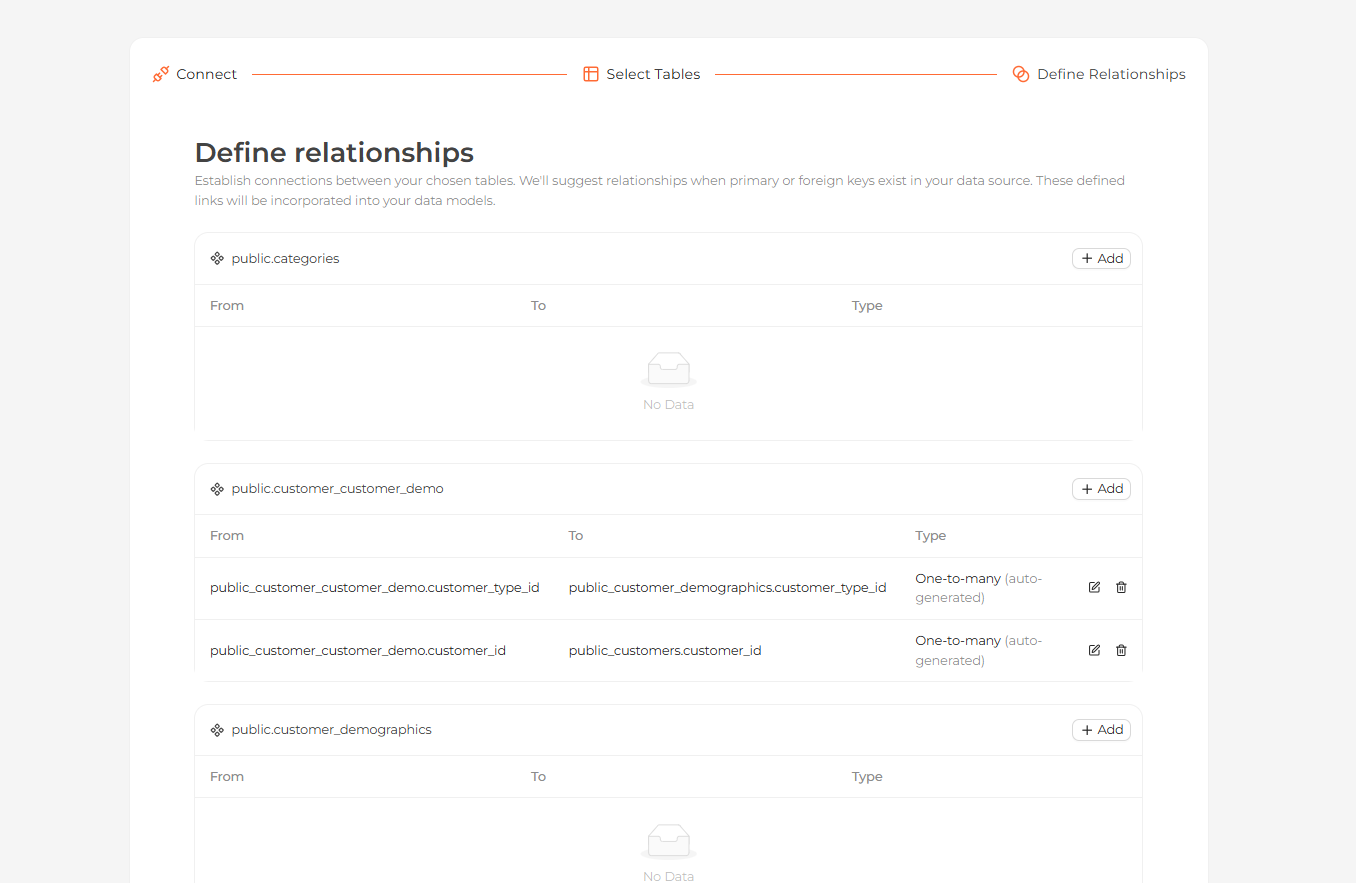 Defining relationships between the imported tables
Start exploring
Your tables now appear on the Modeling page. Open the Home page and ask questions about your data in natural language.
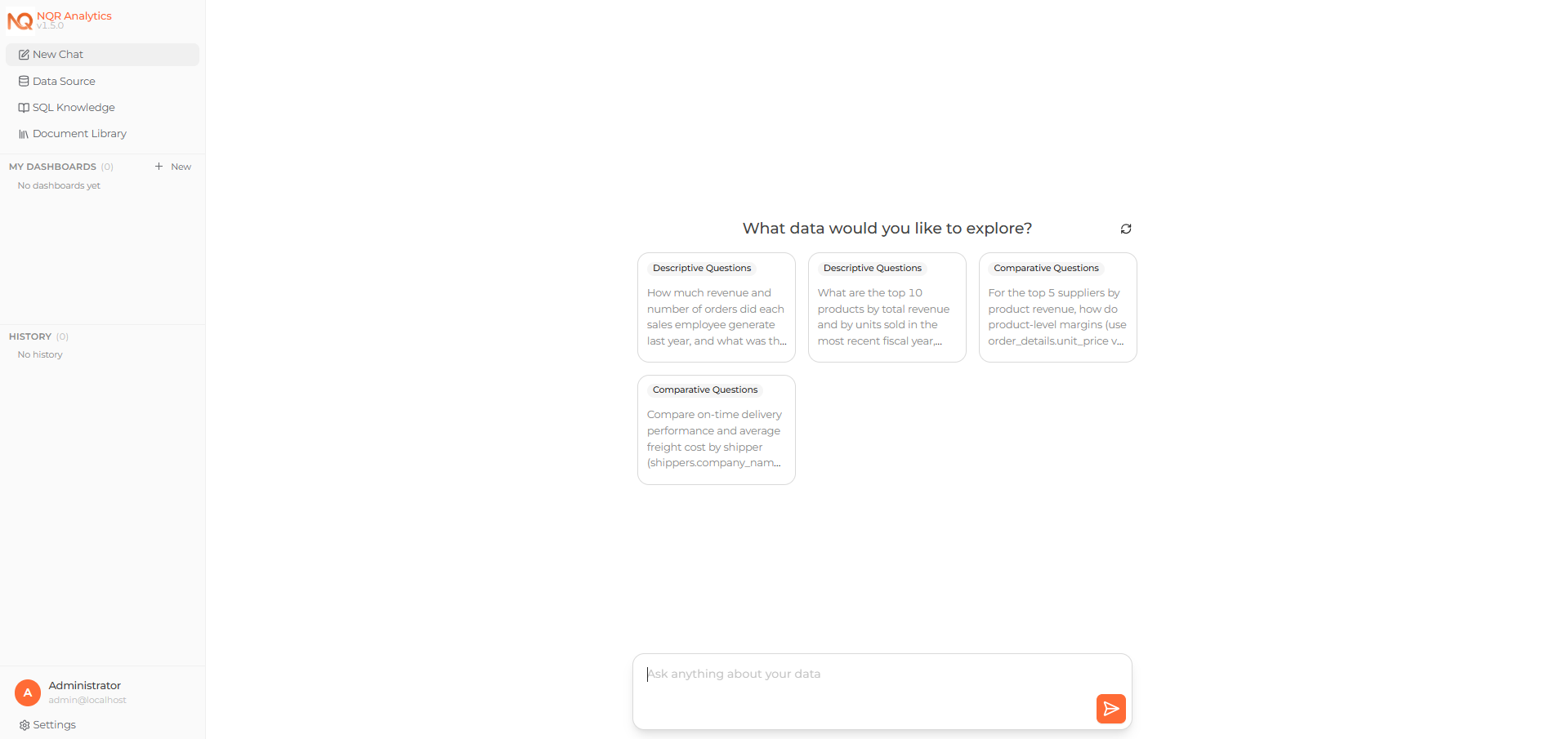 Asking a question about the connected data on the Home page